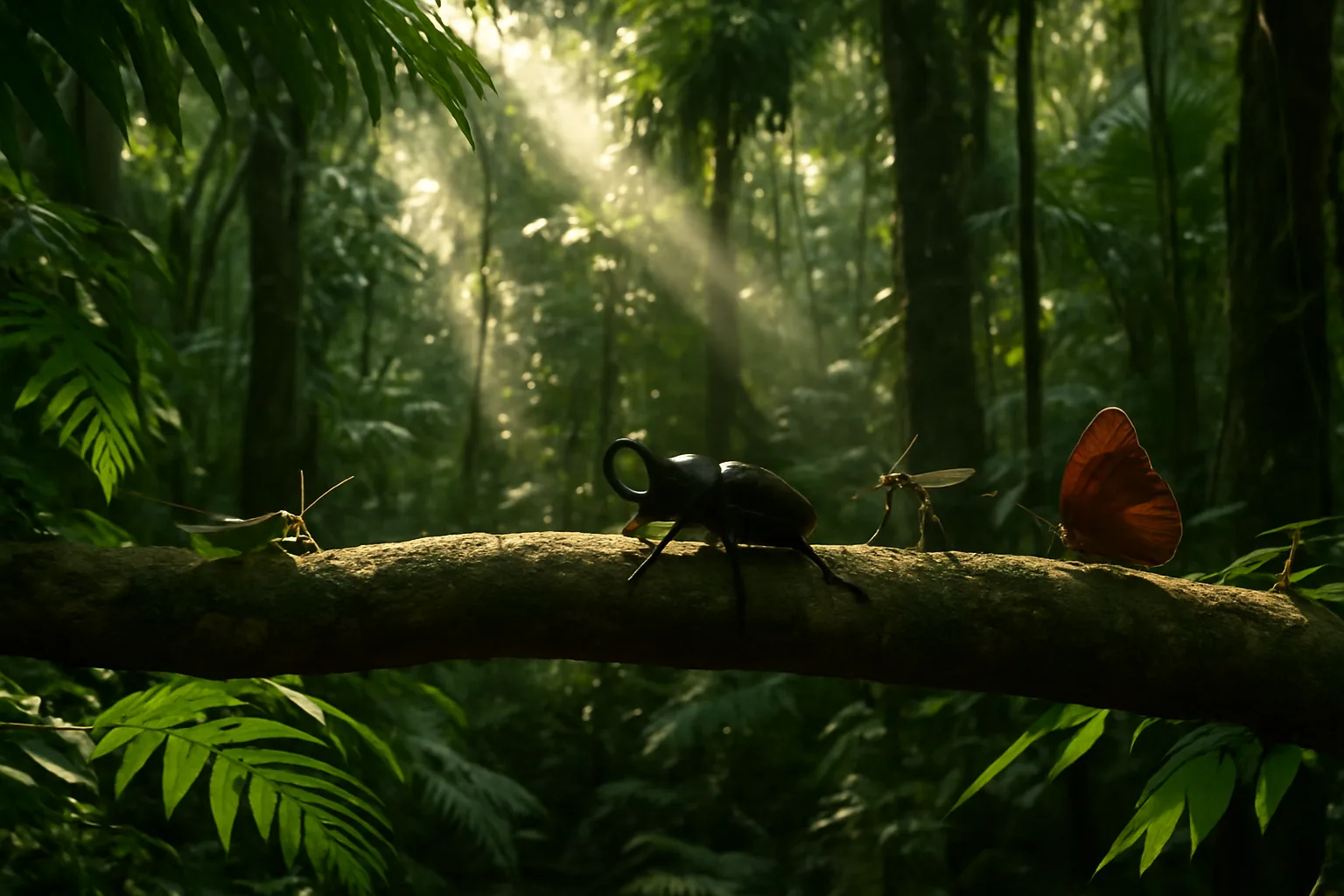
New findings indicate that ancestors of katydids once roamed the Jurassic rainforests, producing a chorus of sounds that filled their environment.
Fossil records and analyses suggest that these early insects played a significant role in shaping the auditory landscape of their ecosystem. The sounds produced by these creatures likely contributed to the complex interactions occurring within the rainforest, impacting both predator and prey behavior.
Researchers have highlighted the importance of this discovery in understanding the evolution of communication among insects. The katydids' songs may have been used for attracting mates or deterring rivals, similar to the behavior observed in modern species.
This research sheds light on the diversity of life during the Jurassic period and emphasizes the role of sound in ancient ecosystems. By examining the fossil evidence, scientists can draw parallels to contemporary insect behavior.
Looking ahead, further studies are expected to explore the evolutionary implications of this acoustic communication. The growing interest in paleoentomology may uncover more about the relationships between ancient species and their environments.
First reported by news.google.com .